
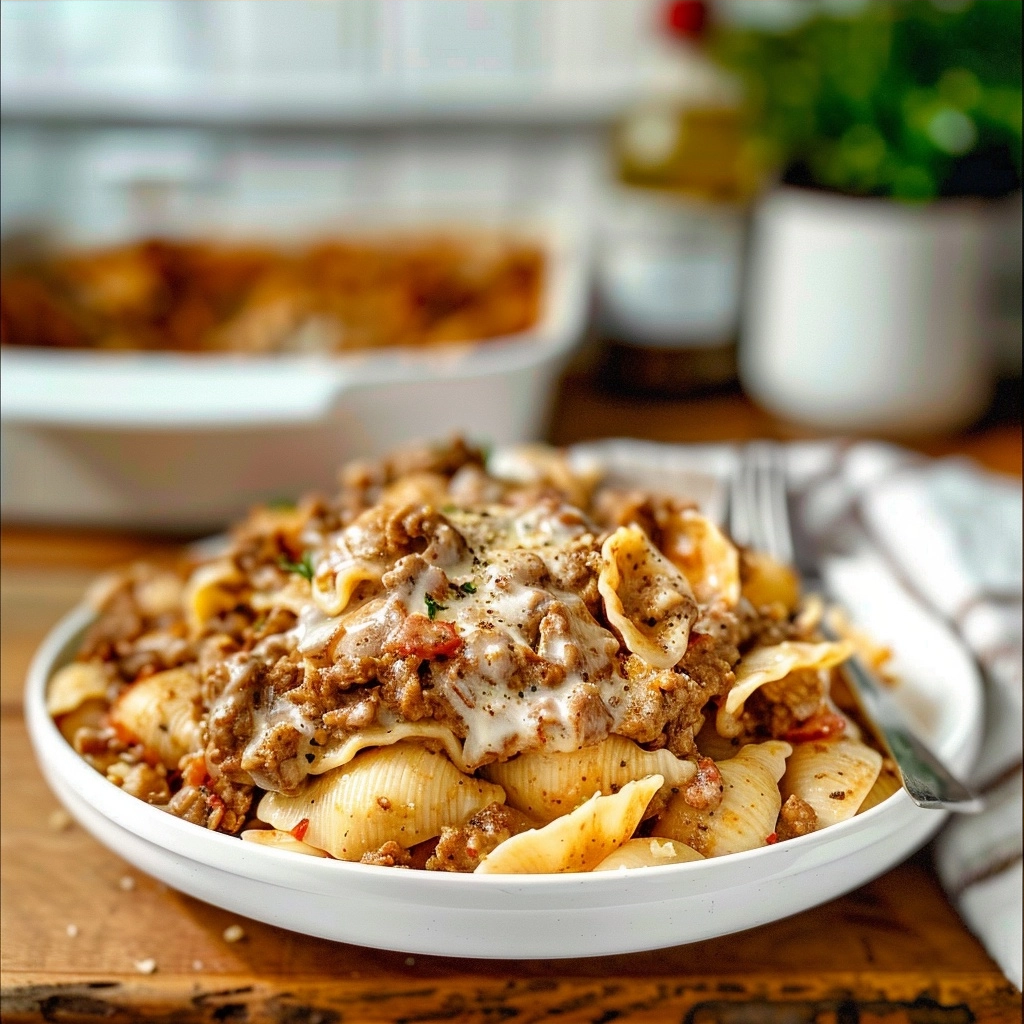
Creamy beef and shells is a comforting, one-pan meal that combines savory ground beef with tender pasta shells in a rich, cheesy sauce. This hearty dish provides a balanced dinner solution for busy weeknights when you need a reliable, family-friendly meal. By using simple pantry staples and fresh quality protein, you create a satisfying dinner that rivals the best comfort foods found in restaurants.
Recipe Overview
| Attribute | Detail |
|---|---|
| Prep Time | 10 minutes |
| Cook Time | 20 minutes |
| Total Time | 30 minutes |
| Servings | 4 servings |
| Difficulty | Easy |
| Cuisine | American Comfort |
Why This Recipe Works
This recipe works because it relies on the starch from the pasta to thicken the creamy sauce naturally. By cooking the pasta directly in the skillet with the beef and broth, you save time on cleanup and infuse the noodles with deeper flavors than traditional boiling methods.
My experience crafting this meal confirms that the balance of sharp cheddar and creamy parmesan creates an ideal flavor profile. Using high-quality lean ground beef ensures the sauce remains smooth rather than greasy, allowing the velvety texture to coat every shell perfectly for a restaurant-quality finish.
Ingredients
| Ingredient | Quantity | Notes |
| Ground Beef (90% lean) | 1 lb | Substitute with ground turkey if preferred |
| Medium Shell Pasta | 12 oz | Use bronze-cut for better texture |
| Beef Broth | 3 cups | Low sodium is best for seasoning control |
| Sharp Cheddar Cheese | 2 cups | Shred by hand for better melting |
| Heavy Cream | 1/2 cup | Use full fat for maximum richness |
| Garlic Powder | 1 tsp | Adds essential depth to the base |
Step-by-Step Instructions
Preparing the Beef Base
- Brown the ground beef in a large skillet over medium-high heat until fully cooked.
- Drain the excess fat from the skillet to ensure a clean flavor for the sauce.
- Add minced garlic and onions to the pan, sautéing until fragrant and soft.
Simmering the Pasta
- Pour the beef broth into the skillet and bring it to a rolling boil.
- Stir in the dry pasta shells, ensuring all pieces are submerged in the liquid.
- Reduce the heat to low and cover the pan, allowing it to simmer for 10 minutes.
Creating the Creamy Sauce
- Remove the lid and stir in the heavy cream and shredded cheddar cheese.
- Simmer for an additional 2 minutes until the cheese is completely melted and smooth.
- Season with salt and pepper to taste before serving warm.
Chef Tips for Perfect Results
- Shred your own cheese blocks to avoid anti-caking agents found in pre-shredded bags which prevent smooth melting.
- Keep the liquid level visible; if the pasta absorbs too much broth, add a splash of water to maintain the saucy consistency.
- Season the beef aggressively while browning to ensure the flavor penetrates the meat before adding the broth.
- Rest the completed dish for three minutes off the heat so the sauce sets slightly around the pasta shells.
Common Mistakes to Avoid
Overcooking the pasta is a frequent error that turns the dish into a mushy texture; monitor the liquid closely to ensure the shells remain al dente. Another mistake is using high heat once the cream is added, which can cause the sauce to separate; always keep the heat low during the final stages. Failing to drain the excess beef fat results in an unappealing slick on top of your sauce. Finally, avoid using low-fat cheese or skim milk, as these lack the structural integrity required to form a stable, creamy emulsion.
Variations and Substitutions
| Ingredient | Substitution | Impact on Flavor |
| Sharp Cheddar | Gouda | Adds a nuttier, sweeter depth |
| Beef Broth | Vegetable Stock | Creates a lighter, cleaner profile |
| Heavy Cream | Cream Cheese | Results in a thicker, tangier sauce |
Serving Suggestions and Pairings
Serve this creamy beef and shells alongside a crisp garden salad with vinaigrette to cut through the richness of the cheese. Complement the meal with garlic-roasted broccoli or steamed green beans to add a necessary crunch and nutritional balance. For a family dinner, it pairs beautifully with warm sourdough bread for dipping.
Storage and Reheating
| Method | Duration | Instructions |
| Refrigerator | 3-4 days | Store in an airtight container |
| Reheating (Stovetop) | 5 minutes | Add a tablespoon of water to loosen the sauce |
Nutritional Information
Approximate values per serving.
| Nutrient | Amount |
| Calories | 480 |
| Protein | 28g |
| Fat | 22g |
| Carbohydrates | 42g |
Frequently Asked Questions
Can I use ground turkey instead of beef?
Ground turkey acts as a seamless substitute for beef in this recipe because it absorbs the surrounding flavors effectively. You may need to add an extra tablespoon of oil when browning to compensate for the lower fat content of turkey.
How do I fix a sauce that has become too thick?
A sauce that is too thick simply requires the addition of a small amount of warm broth or water. Whisk the liquid in one tablespoon at a time until the sauce reaches your desired consistency.
Is this recipe suitable for meal prepping?
This dish is an excellent choice for meal prepping because the flavors continue to meld during refrigeration. Store individual portions in containers and simply reheat with a splash of liquid to refresh the creamy texture.
Can I add vegetables to the skillet?
Adding vegetables like frozen peas or chopped spinach enhances the nutritional profile without altering the cooking time. Fold these ingredients in during the final two minutes of simmering so they remain bright and colorful.
Why did my cheese sauce turn grainy?
Grainy cheese sauce occurs when the mixture reaches a boil after the cheese has been added. Always keep the heat on the lowest setting when stirring in your dairy to ensure a smooth, silky result.
Creating this creamy beef and shells recipe offers a delightful way to bring the family together for a nourishing homemade dinner. By balancing the savory protein with a decadent cheese sauce, you ensure every bite remains memorable and satisfying. Master these simple steps and you will find yourself reaching for this reliable recipe repeatedly throughout the busy work week, making every meal a successful celebration of simple, honest cooking.